London is one of my favourite cities in the world. As a tourist, I’ve been there a few times, and many years ago, I even had the opportunity to live and work there for a few weeks.
So when I needed a home for Ambrose Davids, the main character in my Mythical Menagerie contemporary fantasy series, London was the obvious choice.
It’s a city steeped in history, with centuries-old buildings standing alongside modern skyscrapers, ancient traditions rubbing shoulders with everyday life, and enough mysterious little corners to make you wonder what might be hiding just out of sight.
In other words, the perfect setting for a contemporary fantasy series!
And of course, setting my books in London also meant I could revisit one of my favourite places in the world, even if only in my imagination.
Throughout the series, Ambrose encounters mythical creatures in some of London’s most recognisable landmarks, from peaceful parks and famous bridges to historic buildings and abandoned Underground stations.
Here are ten real-world London locations that feature prominently in his adventures.
1. Big Ben and the Houses of Parliament
Did you know Big Ben isn’t actually the name of the famous clock tower? It’s the nickname of the enormous bell inside it. The tower itself is called Elizabeth Tower, having been renamed in 2012 in honour of Queen Elizabeth II’s Diamond Jubilee.
But let’s not split hairs, shall we? We all still call it Big Ben, regardless.
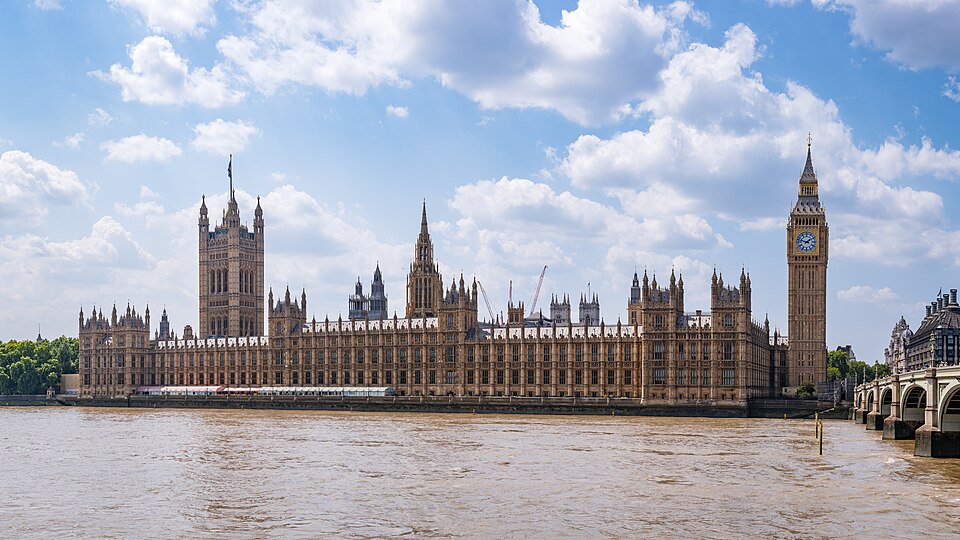
And it’s right here, on the pavement beside Big Ben, that Myth Hunter, the first book in my series, begins.
Poor Ambrose falls flat on his face, with a magnificent rainbow arching across the sky overhead.
That rainbow becomes rather important, because it hangs over Daniel Brady’s shoe shop, where everything Ambrose knows about the world is about to change.
In fact, I loved the image of a rainbow hanging over the Houses of Parliament so much that it featured on the original cover of Beginner’s Luck, the first story in Myth Hunter, back when I was still publishing the book in individual instalments.
I loved the idea of starting a fantasy adventure in such an ordinary, recognisable location.
Well, ordinary apart from the magnificent Gothic architecture, of course.
2. Hyde Park
One of London’s largest and most famous green spaces, Hyde Park is a wonderful place to escape the noise and bustle of the city, with enormous trees, open lawns, and the beautiful Serpentine lake.
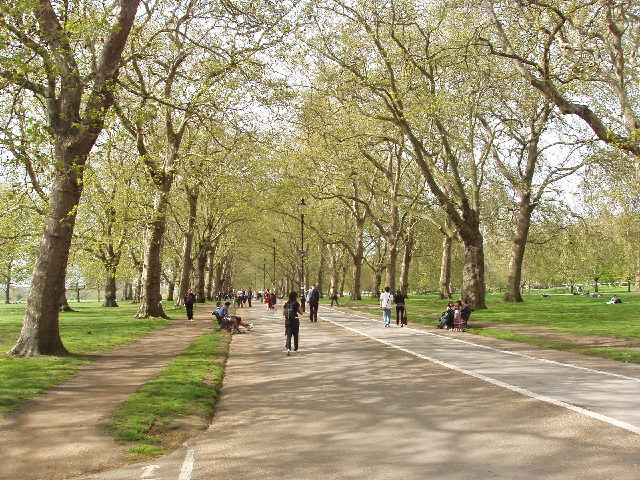
I have particularly fond memories of lying on the grass beneath those enormous trees, staring up at the sky and enjoying a little peace and quiet.
But in Ambrose’s world, Hyde Park is anything but peaceful.
It’s something of a gateway between the ordinary and magical worlds, a place where he frequently encounters mythical creatures. Most notably, an asrai (a water fairy from English folklore) who tries to drown him in the Serpentine.
Not exactly the way I’d want to spend a relaxing afternoon in the park!
Hyde Park is also where Ambrose meets Sarah, and where he agrees to help a little spriggan boy with a rather unusual request.
3. Tower Bridge
Probably one of the most frequently misidentified bridges in the world, Tower Bridge — not London Bridge — is the famous bridge with the two enormous towers and the roadway that lifts up to let ships through.
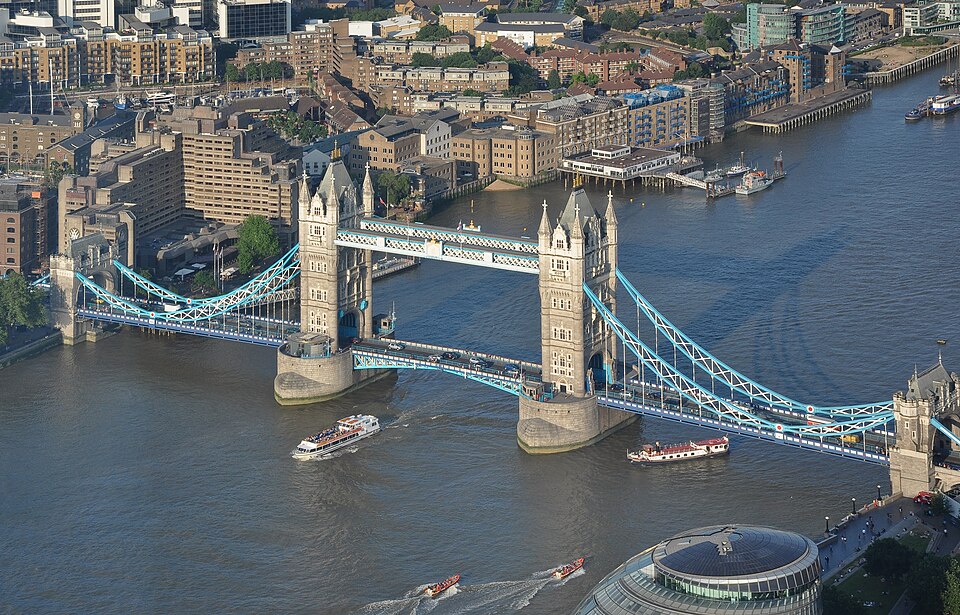
(London Bridge, the one whose name features in the well-known nursery rhyme, is actually a much less spectacular-looking bridge a little further upstream.)
Tower Bridge was completed in 1894, during Queen Victoria’s reign, and was designed so that its two halves could be raised to allow ships to pass through. It’s still quite an impressive sight if you happen to be there at the right time.
And if you’re feeling adventurous, you can even walk along the high-level walkways between the towers, some of which have glass floors that let you look down at the traffic and river below.
In Myth Hunter, Tower Bridge is where Ambrose first spots a young selkie boy living in the Thames. Selkies are creatures from Scottish and Irish folklore that can transform between seals and humans, and I rather liked the idea of one making his home in London’s most famous river.
Later in the series, Ambrose also uses Tower Bridge as — shall we say — incentive to learn how to travel by magic.
4. Millennium Bridge
Speaking of bridges, the much more modern Millennium Bridge is one London landmark that features in my books, even though I haven’t actually visited it myself.
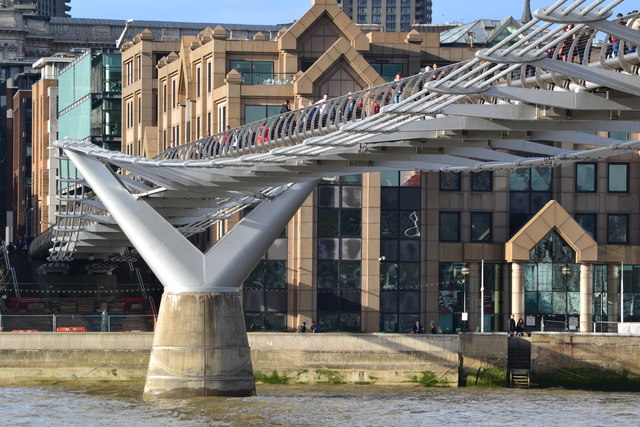
This pedestrian suspension bridge crosses the Thames between St Paul’s Cathedral and the Tate Modern art gallery. It opened in June 2000 and almost immediately developed a rather alarming problem – it t wobbled. Quite dramatically, apparently.
The movement was caused by pedestrians unconsciously adjusting their steps to the swaying of the bridge, which only made the swaying worse. It was quickly nicknamed the Wobbly Bridge and closed just days after opening. Engineers eventually fixed the problem, and it reopened in 2002.
A bridge that wobbles unexpectedly is already a little unsettling, but I decided to make it considerably more dangerous when Ambrose has a near-fatal encounter on it with an afanc, a monstrous water creature from Welsh mythology.
It’s also where the Huntress makes it abundantly clear to him that he’s nowhere near as skilled at hunting mythical creatures as he thinks he is.
5. Trafalgar Square
I have so many fond memories of Trafalgar Square.
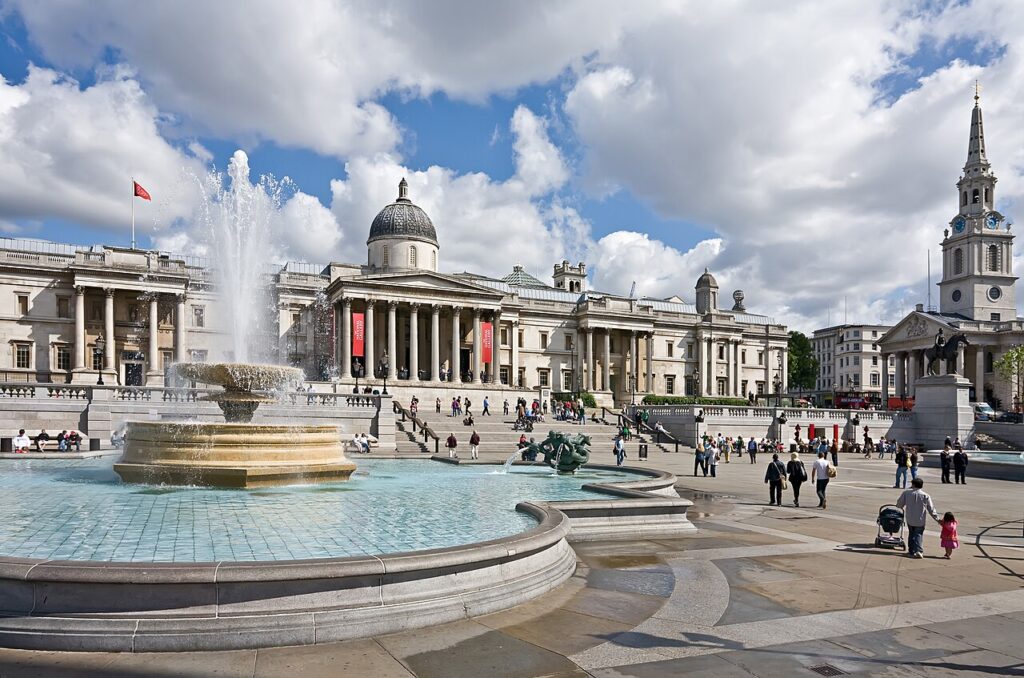
Situated in the heart of London, the square commemorates the British naval victory at the Battle of Trafalgar in 1805, during the Napoleonic Wars. At its centre stands Nelson’s Column, a towering monument to Admiral Horatio Nelson, who died during the battle.
Guarding the base of the column are four enormous bronze lions that are almost as famous as the column itself.
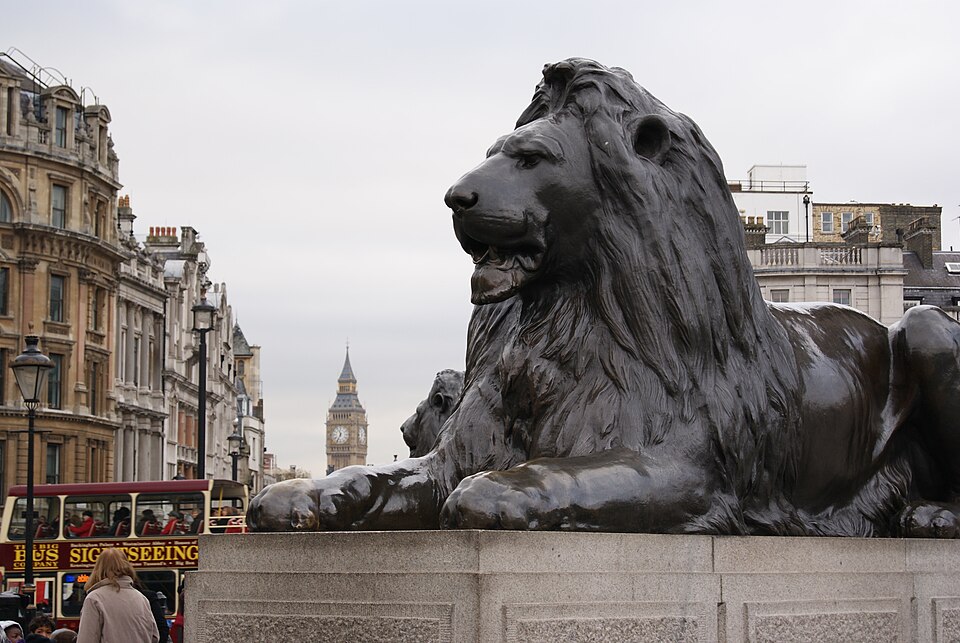
When I visited London, people were still allowed to climb onto them, and naturally, I couldn’t resist giving Ambrose and Sarah the same opportunity. In Myth Keeper, they spend a romantic evening in Trafalgar Square, climbing onto the lions during a date.
At least, it’s romantic until things go horribly wrong.
And considering Ambrose’s confrontation with a werewolf here later in the series, I might just think twice about visiting Trafalgar Square after dark again!
6. The British Museum
Arguably one of my favourite places in all of London, the British Museum is a dream come true for someone as fascinated by history, archaeology, and ancient civilisations as I am.
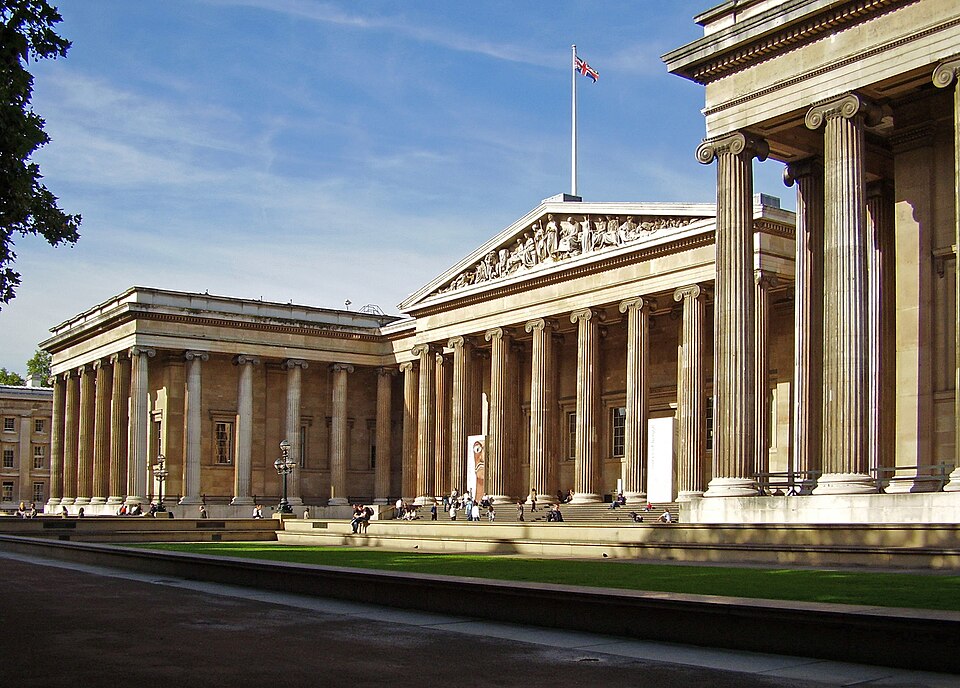
I remember going there after work, wandering through the galleries and staring at the Rosetta Stone and many other fantastic artefacts from all over the world that I’d previously only seen in books. Objects connected to countless ancient myths and legends that I, naturally, had to include it in my books.
In Myth Maker, Ambrose visits the British Museum to learn more about Medusa, the terrifying figure from Greek mythology whose gaze could turn people to stone.
You know, the woman with snakes for hair.
His visit doesn’t go quite according to plan, however, and a dangerous confrontation propels him into hunting an enormous magical snake that’s loose in London.
7. St Paul’s Cathedral
Designed by Sir Christopher Wren after the Great Fire of London in 1666, St Paul’s Cathedral, with its magnificent dome, has dominated London’s skyline for more than three centuries.
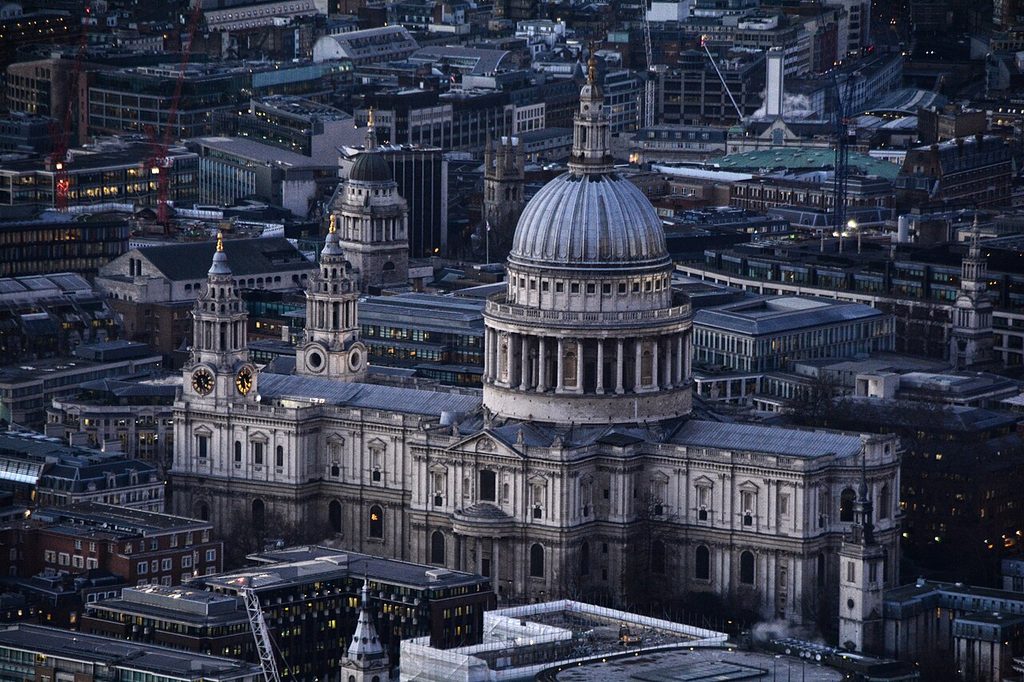
And I still remember how the icy wind whipped my hair into my face as I stood gazing out over the rooftops of London from the top of that dome. It was absolutely breathtaking.
In more ways than one, because if you want to reach the top, you have to climb 528 steps!
Luckily for Ambrose, he stays at ground level when he meets Daniel on the cathedral steps. I won’t tell you what they’re discussing, but I quite like the idea of two men talking about supernatural dangers outside one of London’s most magnificent churches, while ordinary Londoners go about their day completely unaware of what’s happening.
8. Westminster Abbey
Probably one of the most historically significant buildings in Britain, Westminster Abbey has been the site of royal coronations since William the Conqueror was crowned there on Christmas Day in 1066. In fact, forty monarchs have been crowned there, including King Charles III in 2023.
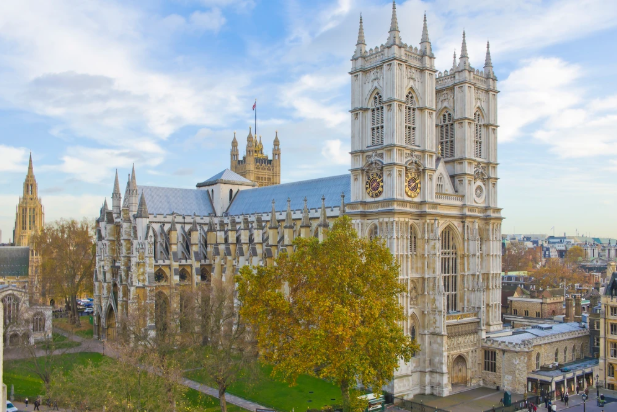
But what fascinates me most about Westminster Abbey is that it’s also the final resting place of some of Britain’s most famous historical figures. Kings, queens, scientists, poets, writers, and composers are all buried or commemorated within its walls, including such well-known names as Isaac Newton, Charles Darwin, Geoffrey Chaucer, and Charles Dickens.
The artist and writer William Morris once described Westminster Abbey as a “National Valhalla”, and you could spend hours wandering through the building, discovering the stories of the people remembered there.
Ambrose, however, isn’t there to admire the architecture or pay his respects to famous historical figures when he pays it a visit in Myth Bringer. He’s desperately searching for a way to save a dear friend’s life. And in the process, he very nearly loses his own.
9. Tate Britain
I’ll admit something: I’m not much of an art enthusiast.
I can appreciate a beautiful painting, but I’m not the sort of person who spends hours studying brushstrokes or discussing artistic movements.
And neither is Ambrose.
His sister Cassie, however, is a very different story.
Cassie finds solace in art, and one of her favourite places to visit is Tate Britain, a gallery dedicated to British art.
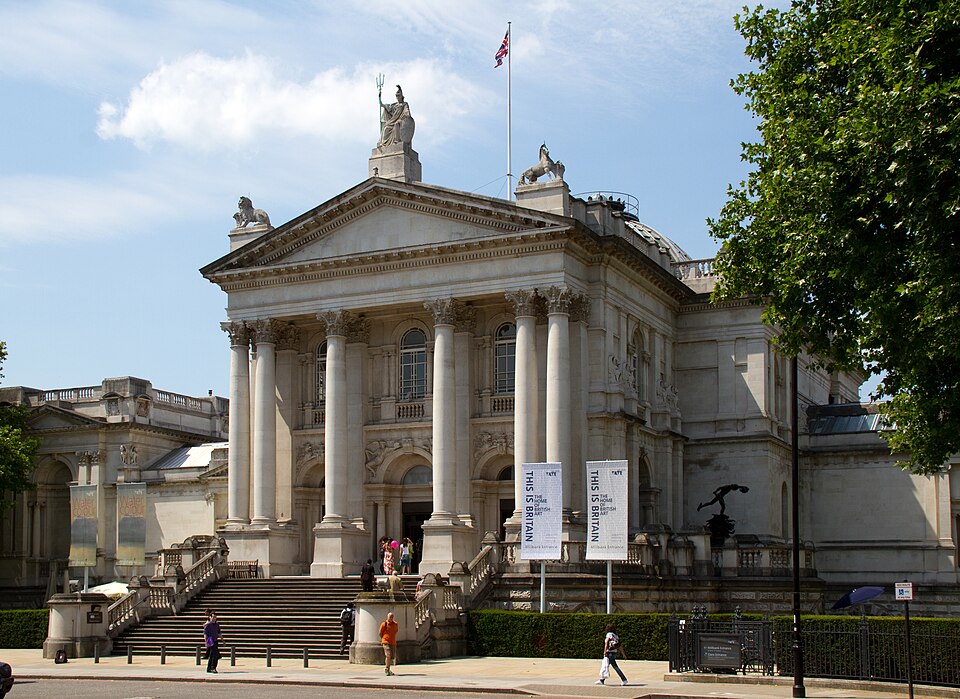
In particular, she’s drawn to a painting called The Lady of Shalott, painted by John William Waterhouse in 1888. It’s a beautiful, haunting painting inspired by Alfred, Lord Tennyson’s poem of the same name, which draws on the legends of King Arthur.
The poem tells the story of a mysterious woman who lives under a curse in a tower near Camelot. She’s forbidden from looking directly at the world outside and can only observe it through a mirror. But when she sees Sir Lancelot, she breaks the rules, looks out of her window, and brings the curse down upon herself.
The painting captures her drifting down the river towards Camelot in a small boat, knowing that she’s doomed.
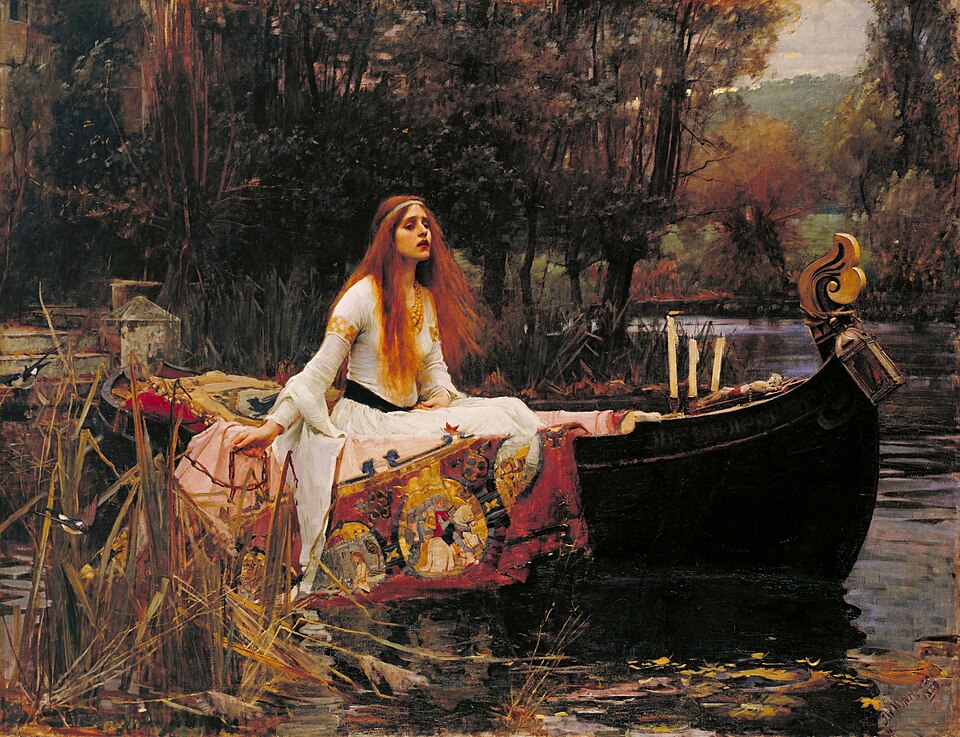
It’s a tragic story about isolation, longing, and the consequences of reaching for something you desperately want but cannot have. And perhaps that’s why Cassie feels such a connection to it.
It’s also in front of this very painting that Ambrose asks her to make a difficult decision that could impact the entire world.
10. Down Street Station
London’s Underground railway system, affectionately known as the Tube, is the oldest underground railway network in the world, with its first line opening in 1863.
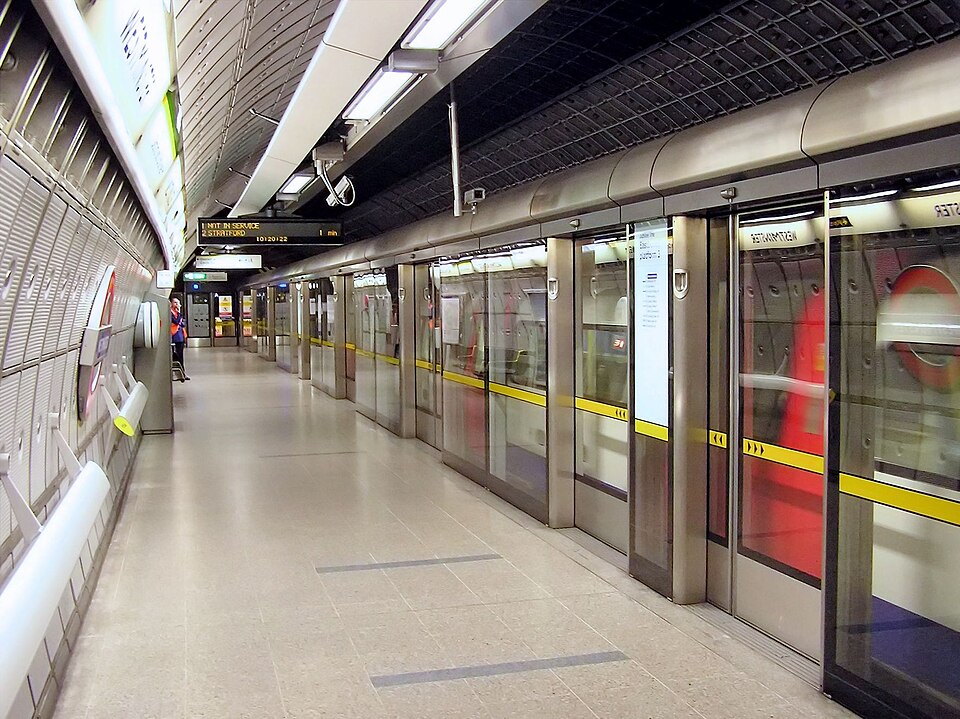
And beneath the busy streets of London, there are several abandoned stations that are no longer used by ordinary passengers – sometimes called ghost stations.
One of them is Down Street Station, which opened in 1907 before closing to passengers in 1932. But that wasn’t the end of its story. During the Second World War, the abandoned station was converted into a secret underground headquarters that helped coordinate Britain’s railways during the war. Winston Churchill even made use of this refuge beneath the streets of London.
These days, you can visit Down Street Station on special guided tours, exploring the deserted passages and learning about its fascinating wartime history.
I don’t know about you, but I think an abandoned underground station is just about the perfect setting for a creepy fantasy encounter.
Imagine dark, abandoned tunnels, a flickering bulb casting eerie shadows, and the distant rumble of trains passing by… And that unsettling feeling that something might be watching you from the shadows.
Ambrose certainly discovers that Down Street Station is hiding more than a few dusty remnants of its wartime past. Things that are considerably more unpleasant than stale biscuits.
So there you have it! Ten real-world London locations that play a part in the Mythical Menagerie series.
One of the things I love most about writing contemporary fantasy is the opportunity to take familiar places and imagine what might be hiding just out of sight. A magical world existing alongside our own, populated by mythical creatures that most people never suspect are real.
And one unfortunate man named Ambrose Davids, who keeps stumbling into their adventures.
If you enjoy fantasy stories that combine mythology, magic, and real-world locations, I hope you’ll consider giving the Mythical Menagerie series a try.
The adventure begins with Myth Hunter, the first book in my completed four-book contemporary fantasy series. It’s available as an e-book, paperback, and hardcover, and is also included in Kindle Unlimited.

What’s your favourite book or series set in London? Or, if you’ve visited the city yourself, which London landmark is your favourite? Let me know in the comments below!
