I’ve always loved epic fantasy. Give me a sprawling imaginary world filled with strange creatures, ancient magic, and extraordinary adventures, and I’m happy.
J.R.R. Tolkien’s The Hobbit was my introduction to fantasy, and The Lord of the Rings cemented my love for the genre. There’s something wonderful about losing yourself in a world entirely different from our own, where magic is real and adventure waits around every corner.
So why, when I started writing my own fantasy books, did I choose to set them in the modern world instead?
Well, the answer involves a leprechaun who refused to be a villain, two unrelated stories that turned out to be connected, and my enduring fascination with the idea that magic might be hiding in plain sight.
It All Started With a Leprechaun
The very first story I wrote in what would eventually become my Mythical Menagerie series was called Beginner’s Luck. It’s now the opening instalment of Myth Hunter, the first book in the series.
The premise was simple enough: Ambrose Davids was an ordinary man living in London. He’d recently lost his well-paying job, his finances were looking increasingly desperate, and he could really use some good luck.
So, naturally, he was going to encounter a leprechaun.
Originally, the leprechaun was supposed to be a curmudgeonly old villain who locked Ambrose in his basement and demanded a ransom. Somehow, Ambrose would outsmart him and trick him into granting him good luck.
Except that’s not what happened.
As I wrote, my grumpy old villain transformed into an attractive young redhead who, rather than becoming Ambrose’s enemy, became his best friend.
Ambrose, meanwhile, developed a considerably more complicated backstory than I’d anticipated. What began as a story about an unlucky man trying to improve his fortunes grew to include a missing father, family secrets, and a hidden world of mythical creatures.
None of that was part of the original plan.
I’ve always been the kind of writer who knows roughly where a story begins and ends but discovers most of what happens in between. Sometimes the characters have their own ideas about how things should unfold.
And apparently, my leprechaun had no interest in being the villain.
When Two Stories Became One World
About halfway through writing Beginner’s Luck, I had another unexpected revelation.
I’d previously written a short story called Keeper of Exotic Animals, featuring Diana, the Keeper of a hidden fortress where mythical creatures were being kept, and Una, the world’s last unicorn.
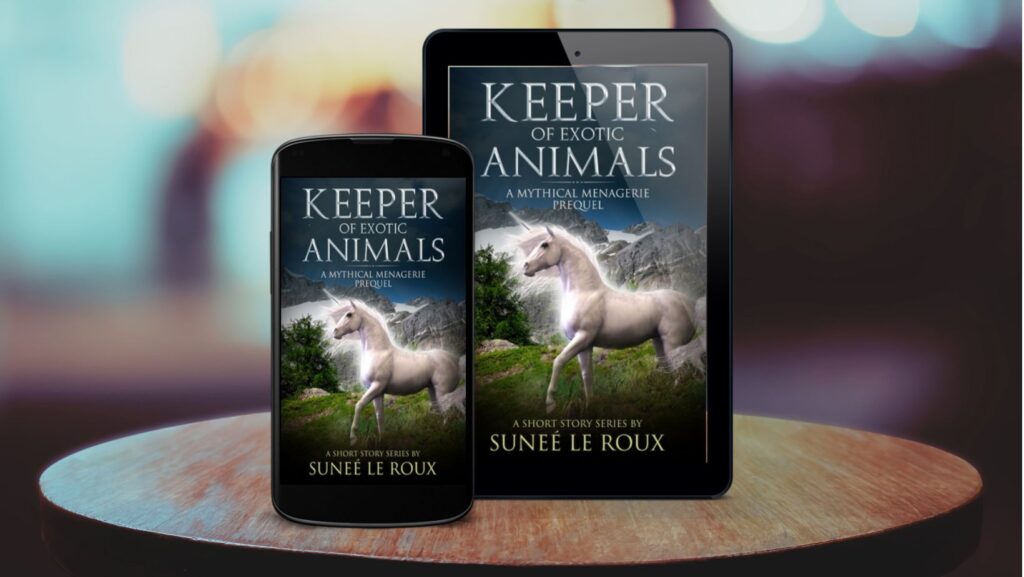
Unlike Beginner’s Luck, which was set in modern-day London, Keeper of Exotic Animals took place in a pseudo-Germanic, gaslamp-era setting. At the time, I considered them completely separate stories, although they had the idea of mythical creatures in common.
In fact, I remember feeling disappointed that I probably wouldn’t be able to do anything further with Keeper of Exotic Animals, now that I was working on a contemporary fantasy story with a similar concept.
And then it occurred to me.
Why couldn’t the two stories exist in the same world?
Just because one took place in a setting reminiscent of an earlier era didn’t mean they had to be entirely separate. One story could simply have happened a long time before the other.
Suddenly, two unrelated stories became part of the same fictional universe.
I hadn’t sat down to create an elaborate fantasy world with its own history and mythology. I’d simply followed two different ideas until I realised they belonged together.
And that little story about an unlucky man and a leprechaun eventually grew into four novels, two prequels, and an entire hidden world of mythical creatures.
Why I Love Magic in the Mundane
But why contemporary fantasy in the first place?
Why have an ordinary man encounter a leprechaun in London instead of following my reading preferences and inventing an entirely new fantasy world?
The simplest answer is that everyday life can be terribly boring. We get up, go to work, go to bed, and then repeat the whole process again the next day.
There’s not much magic in that.
And perhaps that’s one of the reasons why fantasy appeals to so many of us. It offers an escape from the mundane, allowing us to experience extraordinary adventures that simply aren’t possible in our everyday lives.
But there’s something very appealing about bringing that magic into the world we already know.
Imagine encountering a unicorn in an enchanted forest in an imaginary world.
Wonderful, isn’t it?
Now imagine encountering that same unicorn on your way home from the supermarket.
Wouldn’t that be even more extraordinary?
That’s what I love about contemporary fantasy. It takes familiar places and ordinary situations and suggests that perhaps there’s something more to them than meets the eye.
Perhaps the gargoyle perched on the roof of an old building isn’t quite as lifeless as it appears.
Perhaps that strange little shop tucked away in a side street sells things that shouldn’t exist.
Perhaps the person sitting next to you on the train isn’t entirely human.
Epic fantasy takes me somewhere extraordinary. Contemporary fantasy makes the ordinary extraordinary.
Finding Magic in Real Places
One of my favourite things about writing contemporary fantasy is the opportunity to draw inspiration from real places and their folklore.
When I choose a location for a story, I research the mythology and legends associated with that area. I want the magical creatures I introduce to feel as though they belong there, rather than simply dropping them into an arbitrary setting.
Sometimes, the locations themselves spark these ideas.
The gargoyles on Notre-Dame in Paris, for example, immediately inspired me. There’s something about those strange stone creatures looking down over the city that practically begs for a fantasy story.
Real places come with centuries of history, architecture, and folklore, all of which provide wonderful material for fantasy stories.
And I love the idea that readers might visit one of those places and find themselves looking at it a little differently.
But I Write High Fantasy Too!
Although contemporary fantasy is what I’m best known for at the moment, it’s not the only kind of fantasy I write.
In fact, the very first short story I published on Amazon was a high fantasy story called Spirit Caller.
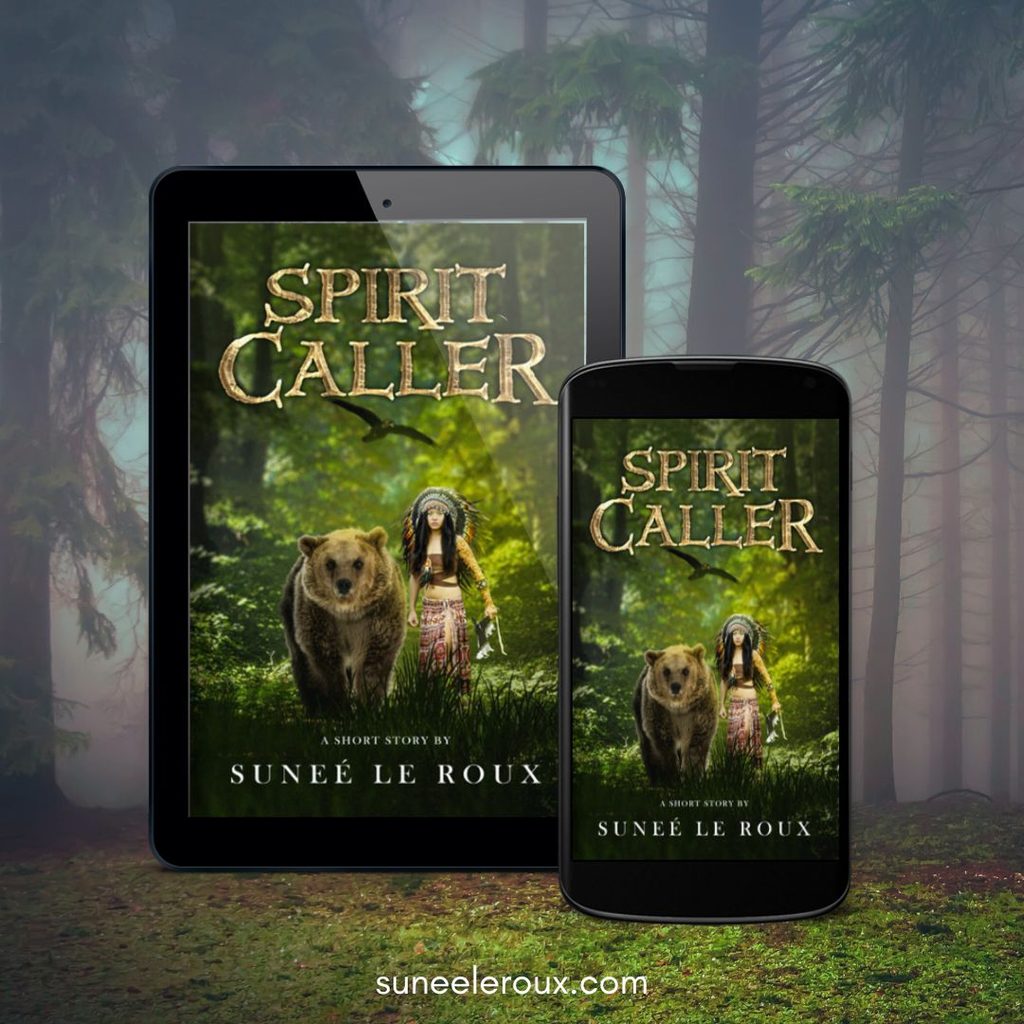
It follows a young girl named Teva, whose village is dying. The crops have failed, the river has dried up, and all the animals have disappeared. To save her people, she journeys into the forest in search of a woman who can speak to the spirits of the earth.
It’s set in an imaginary world with its own mythology and magic, and I thoroughly enjoyed writing it.
And several stories in my Reverie Flash Fiction collections are also high fantasy.
So it’s not that I don’t enjoy creating imaginary worlds. I absolutely do.
But there’s an important distinction between high fantasy and epic fantasy. Although the terms are sometimes used interchangeably, high fantasy generally refers to stories set in an imaginary world, while epic fantasy is characterised by the scale of its conflicts and adventures.
A high fantasy story doesn’t necessarily need enormous armies, complex political intrigue, or the fate of entire kingdoms hanging in the balance. It can be a small, personal adventure involving only a handful of characters.
And that’s much closer to the kind of fantasy I enjoy writing.
When I begin a story, I generally have an adventure in mind. I want my characters to encounter something extraordinary, face challenges, uncover secrets, and emerge changed by their experiences.
I love reading sprawling epic fantasies with their complicated political alliances and world-shattering battles.
I’m just not particularly interested in writing them myself.
Why Contemporary Fantasy Is My Focus—for Now
When I finished the Mythical Menagerie series, I had several ideas competing for my attention. Some were high fantasy. Others were contemporary fantasy. I sat down, divided them into those two categories, and made a conscious decision to focus on contemporary fantasy for the time being.
Not because I’d lost interest in high fantasy, but because I’m still establishing myself as an author. It makes sense to build an audience of readers who enjoy a particular kind of story before branching out into something different.
Fortunately, I had a contemporary fantasy idea that had been demanding my attention for years.
Long before Myth Hunter, I’d participated in NaNoWriMo (National Novel Writing Month), where the goal was to write 50,000 words in a month. One of the stories I worked on was Keeper of Exotic Animals, which came to around 10,000 words. Since that was nowhere near my target, I wrote several other short stories as well.
One of them explored the idea of a human unknowingly making a pact with a god, simply by showing an act of kindness to the god’s familiar.
That idea stayed with me.
And when I began considering which contemporary fantasy story to write next, that one practically jumped up and demanded its turn.
It’s now becoming a new fantasy series inspired by ancient Egyptian mythology, set in modern-day Egypt.
Once again, an ordinary person does something seemingly insignificant, completely unaware that their life is about to change forever.
Will I Ever Write Epic Fantasy?
Probably not in the traditional sense of enormous armies, political intrigue, and sprawling conflicts between kingdoms.
But will I write a full-length high fantasy novel set in a world entirely of my own invention?
Absolutely.
I already have ideas waiting for their turn, and I’m looking forward to exploring them someday.
For now, though, I’m quite happy writing contemporary fantasy.
Because as much as I love disappearing into the extraordinary worlds created by Tolkien and other fantasy authors, I’m still entirely obsessed with the idea that magic can lurk just around the corner of my everyday life.
What about you? Do you prefer fantasy set in entirely imaginary worlds, or stories where magic is hiding in the world we already know? I’d love to hear your thoughts in the comments.

And if you enjoy stories about mythical creatures hiding in plain sight, you can discover where it all began in Myth Hunter, the first book in my Mythical Menagerie series.
