Much like dragons, I have a strange fascination with unicorns.
I’m not entirely sure when or how this happened, but I suspect watching endless hours of My Little Pony as a child in the 80s might have had something to do with it.
Whatever the cause, unicorns eventually became rather important to my own fictional world. In fact, the entire magical ecosystem of my Mythical Menagerie series revolves around a single unicorn named Una.
But before we get to her, let’s look at where unicorns came from — because people have been telling stories about one-horned creatures for a very long time.
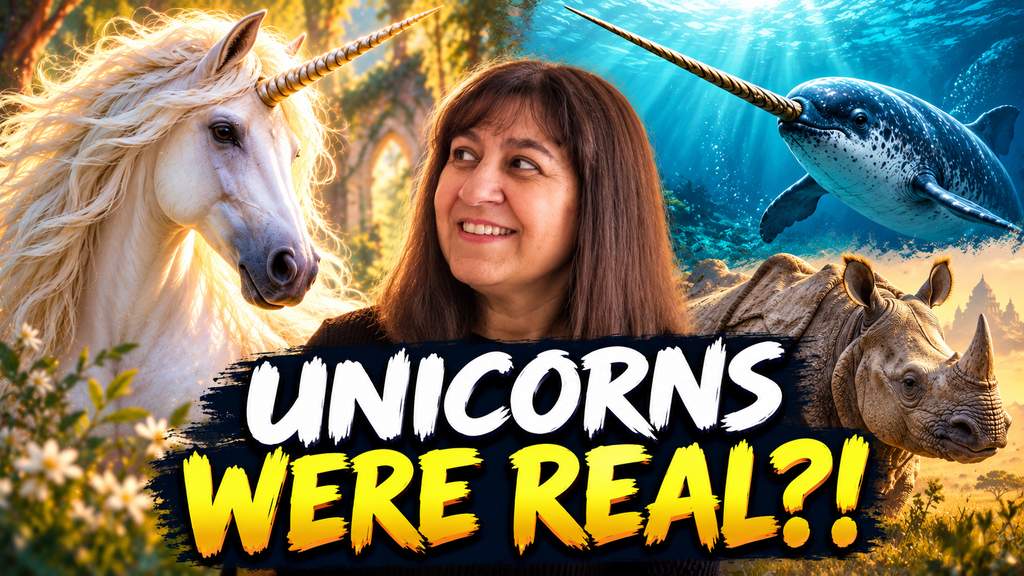
Unicorns Before They Were Unicorns
Stories and depictions of one-horned creatures appear in ancient cultures across Asia, although they didn’t necessarily resemble the beautiful white horses we picture when someone says unicorn today.
Ancient Greek writers even described unicorn-like creatures as though they were perfectly ordinary — if somewhat exotic — animals. One of the earliest surviving accounts comes from the Greek physician and historian Ctesias, who wrote about India in the fourth century BCE. He described wild asses with white bodies, reddish heads and a single horn. They were supposedly incredibly fast and difficult to capture.
Later writers then repeated and embellished stories of these strange one-horned animals living in distant lands.
Modern scholars have suggested that some of these accounts may have been inspired by real animals encountered through travellers’ stories, including the Indian rhinoceros.
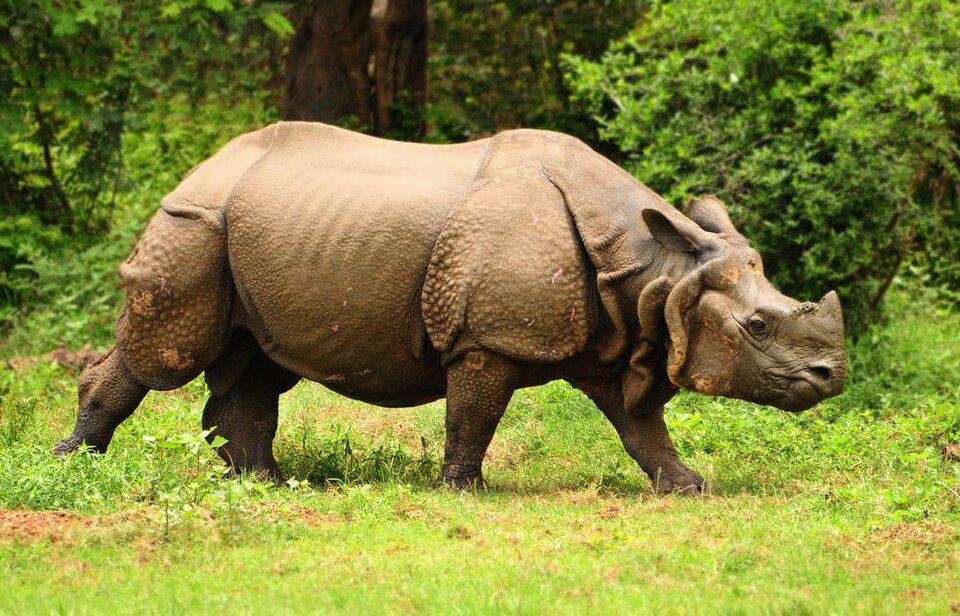
Somewhere along the way, these descriptions of unfamiliar animals must have become a little more fantastical.
The Medieval Unicorn
By the Middle Ages, the unicorn had evolved into something much closer to the creature we recognise today: usually a white horse (or goat-like animal) with a long, spiralling horn projecting from its forehead.
And that horn was extremely useful. People believed unicorn horns could detect or neutralise poison, purify contaminated water and even cure disease. Supposed unicorn horns became enormously valuable possessions among European royalty and nobility.
There was just one slight problem: quite a few of those “unicorn horns” came from narwhals.
Narwhal tusks can reach impressive lengths, has a natural spiral and come from mysterious animals living in distant northern waters. To someone who had never seen a narwhal — which was most Europeans — they made surprisingly convincing evidence that unicorns really did exist.
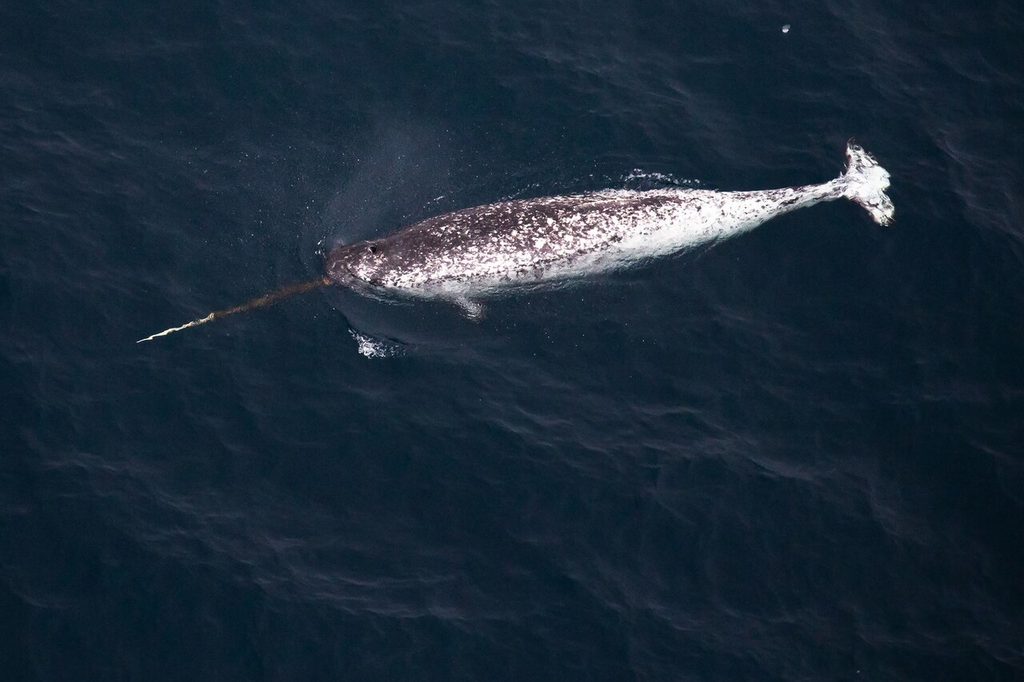
Suddenly, the idea of someone proudly displaying their priceless unicorn horn becomes considerably more entertaining when you imagine a whale swimming around somewhere missing a tooth.
Unicorns and Purity
The unicorn also acquired another association during the Middle Ages: purity.
Unicorns appeared frequently in medieval art and literature, including Christian allegories in which the creature could only be approached by a young maiden. The unicorn would come willingly to her and lay its head in her lap.
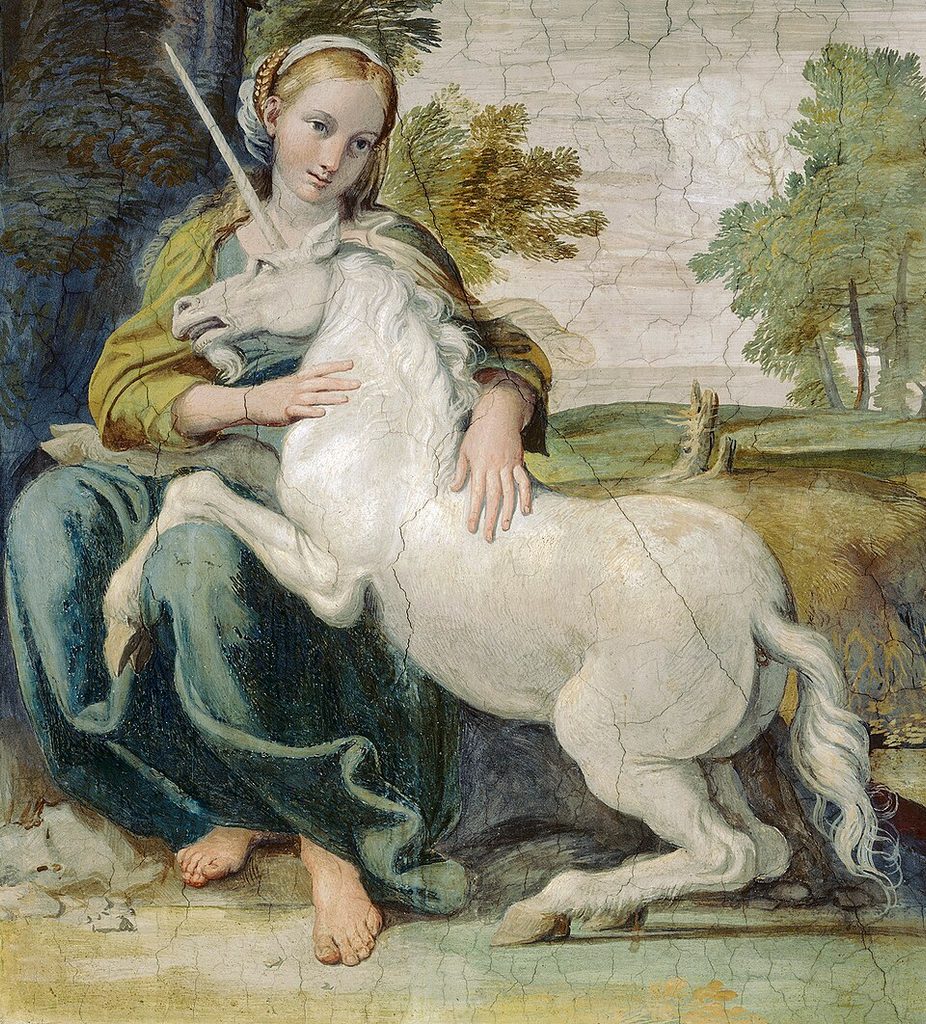
Image credit: Wikimedia Commons.
The maiden was often interpreted as representing the Virgin Mary, while the unicorn could represent Christ.
Over time, this helped give us one of the most enduring pieces of unicorn folklore: that a unicorn can only be tamed or captured by a virgin.
And while plenty about the unicorn has changed over the centuries — from fierce wild beast to graceful white horse to rainbow-covered children’s toy — that association with purity has proved remarkably persistent.
Which brings me to Una.
The Last Unicorn in the Repository
When I first created the world of Mythical Menagerie, I imagined a hidden fortress called the Repository.
The Repository exists to protect the world’s mythical creatures from humanity — and, occasionally, humanity from the world’s mythical creatures.
But the creatures aren’t simply magical animals.
In my world, every species of mythical creature is connected to a particular human trait. As long as that creature continues to exist, so does the trait it represents.
If the species becomes extinct, humanity loses that trait forever.
And unicorns represent purity.
At the very centre of the Repository lives Una, the last unicorn in existence.
Which means that as long as Una survives, so does purity.
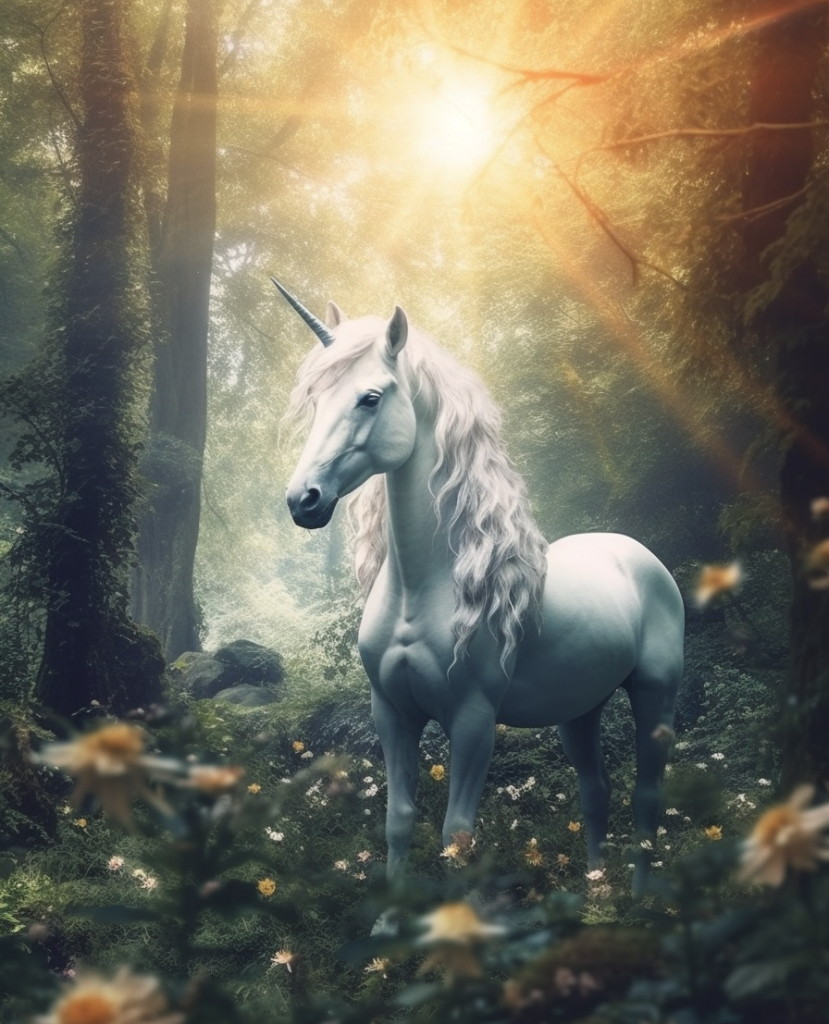
Una isn’t simply another magical creature hidden away in the Repository. Her survival matters to the entire world, whether anyone outside its walls knows she exists or not.
And then one day, she disappears.
Where Una’s Story Begins
The tale of Una’s disappearance is told in Keeper of Exotic Animals, a short story set before the main Mythical Menagerie series.
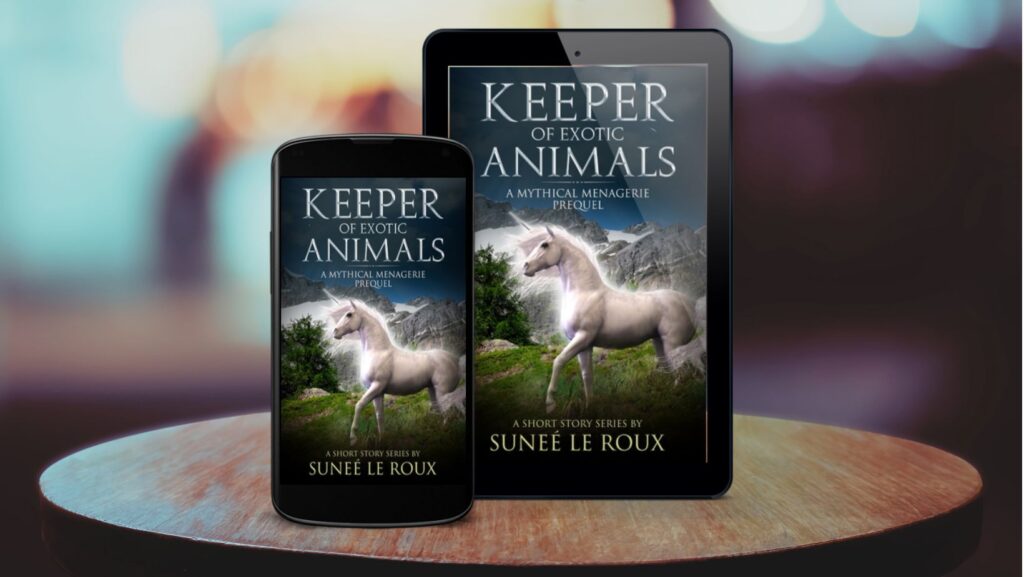
It introduces Diana, the Keeper of Exotic Animals: the woman responsible for the Repository and the extraordinary creatures living inside it.
And when the world’s last unicorn goes missing, finding her becomes rather important.
Keeper of Exotic Animals also provides an early glimpse into the Repository and some of the ideas that eventually become central to Ambrose’s story in the main series.
And you can read it completely free.
Get your free copy of Keeper of Exotic Animals here.
Una’s importance doesn’t end with that story, either. She remains central to the mythology running throughout Mythical Menagerie — because when the continued existence of purity depends upon one very special creature, you probably want to keep a close eye on her.
Now I Need More Unicorns
Despite building a significant chunk of my fictional universe around one, I haven’t actually read any books featuring unicorns.
Peter S. Beagle’s The Last Unicorn is an obvious gap in my reading history that I really need to correct, and Katherine Arden’s The Unicorn Hunters is high on my TBR list (affiliate links).
So I’m looking for recommendations. Bonus points if the unicorns are strange, dangerous, or otherwise nothing like the sparkly creatures decorating children’s pencil cases.
Have you read a great fantasy novel featuring unicorns? Let me know in the comments.
