Why do I have to wait months, sometimes even years, before I can get the next book in a series in the same size as the previous one? And why on earth do publishers insist on changing cover designs halfway through a series?!
As a lifelong reader, there are certain things about books and publishing that annoy the hell out of me.
But here’s the funny thing: since becoming an indie author myself, I’ve discovered that many of these infuriating decisions actually make a surprising amount of sense.
Does understanding the reasons behind them make them any less annoying?
Absolutely not!
But here are ten of my biggest pet peeves as a reader, and why I now have a little more sympathy for the authors and publishers responsible for them.
1. Books Published in Different Sizes
I like my bookshelves organised. Not necessarily alphabetically or by colour, but when I buy a series, I absolutely need all the books to be the same size.
Surely that’s not too much to ask?
Apparently, it is.
This happens particularly often when I discover a series late, just before the final book is published. I’ll happily buy the first three books in matching paperback editions, devour them, and then discover that the fourth book is only available in a format that’s not the same size of the others.
Now I’m faced with an impossible choice: wait another six months or a year for the smaller paperback edition, or buy the enormous one and ruin the aesthetic of my bookshelf.
Naturally, my impatience to finish the story usually wins.
And then I’m stuck with a collection that looks mismatched. It’s one of the many reasons why I now read most of my fiction in e-book format.
But here’s why it makes sense as a writer.
Different readers prefer different formats. Some love hardcovers, others prefer trade paperbacks, and others want smaller, more affordable editions.
By staggering the release of these formats, publishers can reach different audiences at different price points. Each new edition also creates another opportunity to promote the book and generate sales.
It’s a perfectly reasonable business strategy.
I still wish they’d stop doing it.
2. Book Covers That Change Mid-Series
If there’s one thing worse than books of different sizes, it’s books with completely different cover designs.
Allow me to direct your attention to my Wheel of Time collection.

I bought these books diligently as they were released, making sure I got the correct size and matching covers. Everything was going beautifully until Book 10 arrived with a completely different design.
To this day, it still bothers me when I look at that shelf.
And yet, as an author, I’m guilty of exactly the same thing.
When I first published Myth Hunter and Myth Keeper, they had a particular cover style. But by the time I released Myth Maker, I’d decided to redesign the covers for the entire Mythical Menagerie series.

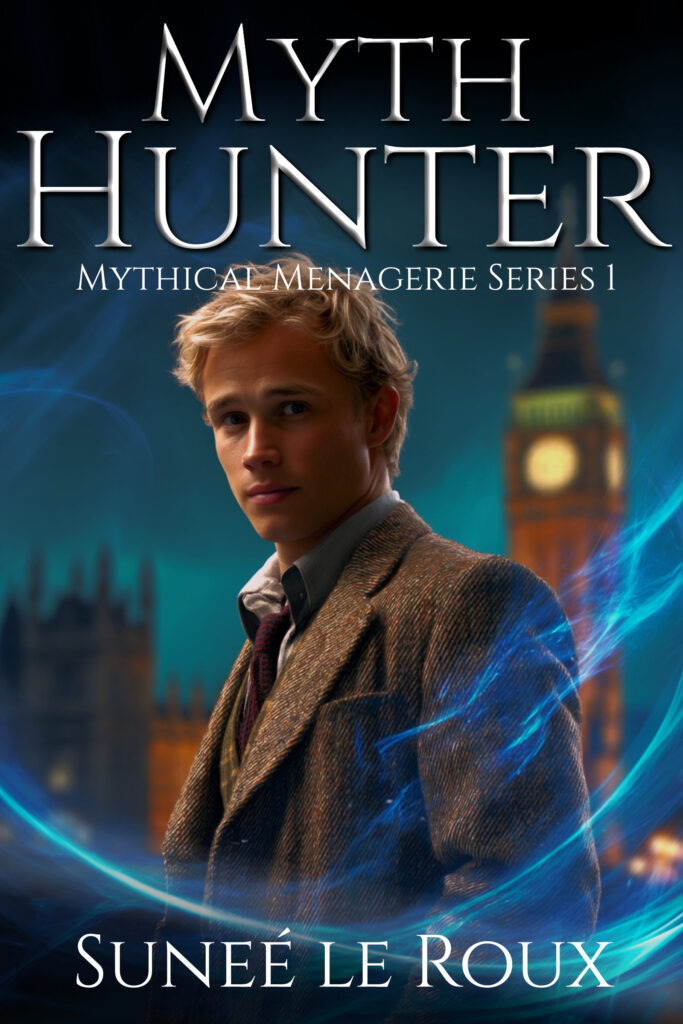
My original cover designer was no longer available, which made continuing the existing style difficult. But more importantly, I’d realised that my covers weren’t communicating the genre as effectively as they could.
A book cover isn’t just decoration. It’s one of the most important marketing tools an author has.
Readers make split-second decisions based on covers. If a contemporary fantasy novel looks like a historical romance, it might attract the wrong audience while completely missing the readers who would love it.
Sometimes a redesign is necessary to help a book find its audience. Publishers also refresh covers to appeal to changing tastes or introduce older books to new readers.
I understand all of that now.
But when I’m the reader whose carefully coordinated collection has been ruined, I reserve the right to be annoyed!
3. Social Media Ads That Don’t Tell You What Book They’re Advertising
Have you ever been scrolling through Facebook or Instagram and come across an intriguing book advert?
There’s a beautiful illustration, perhaps a mysterious creature or a dramatic fantasy landscape, accompanied by a tantalising tagline. It looks exactly like the sort of book you’d enjoy.
Except there’s no title. No author name. Not even a picture of the cover!
Why should I have to click on an advert just to find out what book it’s advertising?
Well, unfortunately, I’ve discovered that this approach can work remarkably well.
I’ve experimented with different Facebook ads for my own books, and I’ve found that including the actual cover doesn’t always produce the best results. Sometimes an intriguing image that captures the atmosphere of the story is much more effective at making people stop scrolling. Once they click through to the Amazon page, they can see the cover, read the blurb, check the reviews, and decide whether the book appeals to them.
The advert’s job isn’t necessarily to provide all the information. It’s to generate enough curiosity to encourage that first click.
And as much as it annoys me when I’m browsing social media, I have to admit that it’s a clever marketing strategy. One that I’ve used myself!
4. Hyped Books That Don’t Live Up to the Buzz
We’ve all encountered them: those books that seem to be absolutely everywhere.
Everyone on social media is reading them. Reviewers are declaring them masterpieces. People are insisting that you absolutely must read this incredible story because it’s the best thing they’ve ever encountered.
Eventually, you give in. You buy the book, settle down with enormous expectations, and start reading.
And then… It’s rubbish.
You finish the book wondering whether everyone else somehow read a completely different version.
I’ve certainly had that experience.
But as an author, I understand why creating buzz around a book is so valuable.
There are millions of books competing for readers’ attention, and getting yours noticed can be incredibly difficult. When people start talking about a book, recommending it to friends, and sharing it online, that attention can generate more attention. Suddenly, the book is reaching readers who might otherwise never have discovered it.
Believe me, I’d be delighted if everyone was talking about my books!
But there’s something else I’ve come to appreciate: Not every book is meant for every reader.
Just because thousands of people adore a story doesn’t mean I’m going to enjoy it.
We all have different tastes, expectations, and preferences. Sometimes the problem isn’t that a book is objectively terrible. It’s simply that the hype convinced me to read something that was never really suited to my tastes.
These days, I try to remember that before jumping on the latest bookish bandwagon.
5. Trope Lists and Trigger Warnings
This one might be a little controversial.
Personally, I prefer to know as little as possible about a book before reading it. I want to discover the story as it unfolds. I want the characters to surprise me, the relationships to develop naturally, and the plot twists to catch me completely off guard.
But these days, books are often advertised with lists of tropes. Enemies to lovers. Found family. Forced proximity. Grumpy meets sunshine.
And while I understand why these descriptions appeal to readers, sometimes I feel as though I’m being told too much before I’ve even opened the book.
Enemies to lovers? Well, I suppose we already know where that relationship is heading!
Then there are trigger warnings.
I understand why they’re important, but personally, I prefer not to read them unless there’s something specific I’m concerned about. For example, if I see a warning about animal abuse, my immediate reaction is to worry that the dog is going to die.
And suddenly I’m anticipating something terrible that might not even happen. The warning could refer to an incident that wouldn’t bother me much at all, but now it’s in my head.
As a writer, though, I recognise that other readers have very different needs.
Trope lists help readers find the kinds of stories they already know they enjoy. For some, discovering a book with a favourite trope is part of the excitement.
Trigger warnings serve a different, and perhaps even a more important, purpose. They allow readers who have experienced trauma, or who are particularly sensitive to certain subjects, to make informed decisions about what they’re comfortable reading.
And from an author’s perspective, helping readers choose books that suit their preferences is a good thing. After all, the last thing you want is someone picking up your book expecting one kind of story and getting something entirely different.
My ideal solution would be to make that information available to those who want it, without forcing those of us who prefer surprises to encounter it. That way, everyone wins!
6. Books That Are Too Expensive
I’m a voracious reader. Which means buying books can become a rather expensive hobby. And I’ll admit that I’m quite particular about how much I’m willing to spend.
If an e-book costs more than ten dollars, I’m probably not going to buy it. To be perfectly honest, I think twice when it costs more than three!
There are so many wonderful books available at affordable prices that I find it difficult to justify spending a fortune on a single e-book. Especially when there isn’t even a physical book involved.
But becoming an author has completely changed my understanding of book pricing.
Writing and publishing a book can be enormously expensive. There’s the time spent writing it, which can amount to hundreds or even thousands of hours. Then there are potentially editing, proofreading, cover design, formatting, advertising, and countless other expenses.
And when the book finally sells, the author doesn’t necessarily receive the full purchase price. Retailers take their share, and depending on the publishing arrangement, other parties may be involved too.
Traditionally published authors often have little control over the prices set by their publishers.
A book represents a tremendous investment of time, creativity, and often money.
Authors deserve to be compensated fairly for that work. I understand that completely. But as a reader with a limited book-buying budget, I’m still going to look for bargains!
7. Cliffhanger Endings
Oh, cliffhangers.
Few things frustrate me more than reaching the end of a book only to discover that the story isn’t finished.
I’ve spent hours following the characters, worrying about their problems, and desperately hoping everything will work out.
And just as I’m about to discover what happens… The book ends.
Excuse me?! What do you mean, To Be Continued?! I want to know what happens to the hero dangling off the edge of that cliff! And now I have to buy another book to find out?
It can feel like a cheap trick to force readers into continuing with a series.
Except… I’m guilty of this one too. Two of my Mythical Menagerie books end on cliffhangers.
And there’s a very practical reason for that. When a book ends neatly, readers have a natural opportunity to stop. They’ve enjoyed the story, they’re satisfied with the conclusion, and they might decide to read something else before returning to the series.
But a cliffhanger creates a much stronger incentive to pick up the next book immediately. I’ve seen this reflected in the way readers move through my own series.
Of course, cliffhangers can also backfire. Some readers refuse to start an unfinished series if they know the books end that way. And I understand that completely!
I also think there’s a distinction between leaving questions unanswered and failing to deliver a satisfying story. Even when a larger adventure continues across several books, I believe each instalment should offer something worthwhile in its own right.
So yes, I understand why authors use cliffhangers.
I just don’t particularly enjoy being on the receiving end of them.
8. Long Gaps Between Book Releases
There’s something wonderful about discovering a new series and realising that several books are already available. You start reading, get completely hooked, and before you know it, you’ve devoured the first three books.
Now you absolutely have to know what happens next. So you go looking for Book 4.
Except it hasn’t been published yet.
Fine. When is it coming out?
You check the publication date of Book 3.
Five years ago.
FIVE YEARS?!
What on earth has the author been doing?!
Well, as a writer, I have a much better understanding of what they might have been doing.
Writing books takes time.
And not every book is equally easy to write. Sometimes a story comes together beautifully. Other times, you spend months trying to work out why your characters aren’t behaving as expected, or why the plot that seemed so brilliant in your head isn’t working on the page.
Sometimes life gets in the way. Sometimes you need more research, or a complete rewrite, or simply some distance from the manuscript.
And not every author is able to write full-time. Many have jobs, families, and other responsibilities competing for their attention.
I certainly wouldn’t want to rush a book out simply because readers are waiting for it. I’d much rather take the time to get the story right.
Which means I understand why long gaps happen.
But that doesn’t mean I’m going to stop checking whether Book 4 has finally appeared!
9. Series That Are Never Finished
And speaking of waiting for the next book…
George R. R. Martin. Patrick Rothfuss. I’m looking at you two!
I’ve been waiting for years — decades, even — for these authors to finish their respective series. And at this point, I’ve pretty much given up hope that I’ll ever get to read the conclusions.
Which is incredibly frustrating.
I’ve invested time, money, and a considerable amount of emotional energy into these characters and their worlds. I want to know what happens to them!
I know authors don’t technically owe readers anything beyond the books they’ve already published. But when you’ve spent years following a story, it’s difficult not to feel disappointed when the ending remains out of reach.
As a reader, I consider abandoning a series practically a cardinal sin.
But as a writer, I’ve realised that finishing a series isn’t always as straightforward as it seems.
I can only imagine the pressure of having millions of readers waiting for the next instalment, each with their own expectations about how the story should end.
And sometimes stories become so complicated that finding a satisfying conclusion is enormously difficult.
There are also practical considerations. For indie authors in particular, a series that isn’t selling well can become financially impossible to continue. Writing another book takes time and money, and sometimes an author has to make the difficult decision to move on to something that has a better chance of paying the bills.
I’m not suggesting that these are necessarily the reasons behind any particular author’s delays. I simply understand now that there can be far more going on behind the scenes than readers realise.
It doesn’t make the disappointment any less real. And I’d still really like to know how those stories end!
10. When Authors Spend More Time Promoting Their Books Than Writing New Ones
Finally, there’s something else that drives me crazy as a reader. You’ve read all the books by one of your favourite authors, and you’re eagerly awaiting the next one. But every time you open social media, there she is: talking about the books you’ve already read. Again.
Another Facebook post. Another Instagram picture. Another YouTube video.
And you find yourself thinking, Wouldn’t your time be better spent writing the next book?!
But the unfortunate reality of being an author, especially an indie author, is that writing books is only part of the job. You also have to convince people to read them.
And that means marketing. Lots and lots of marketing.
Social media content, advertising campaigns, websites, newsletters, promotions, and all the other activities involved in getting your books in front of potential readers.
Because no matter how wonderful your stories might be, if nobody knows they exist, nobody is going to read them.
And promoting your existing books is just as important as promoting new releases. A book doesn’t suddenly become irrelevant because it was published five years ago. To someone who’s never encountered it before, it’s brand new!
Believe me, I’d much rather spend my days writing stories about mythical creatures than trying to figure out why my latest Facebook advert isn’t performing.
But marketing is part of the job.
So the next time you see your favourite author posting about a book you’ve already read, remember that they’re probably doing it because they want to be able to afford to write the next one.
And perhaps give that post a little Like while you’re there. You might help someone else discover a series you’ve been enjoying!
Understanding Doesn’t Make It Less Annoying!
So there you have it: ten things that annoy the hell out of me as a reader, but that make a surprising amount of sense now that I’m a writer.
And the funny thing is, understanding why these things happen hasn’t necessarily made them any less frustrating.
I still want my books to match.
I still hate waiting years for the next instalment.
And I still don’t want to pay ten dollars for an e-book!
But at least now I appreciate that there are often perfectly reasonable explanations behind the decisions that drive me crazy.
What about you? Which of these things annoys you the most? And what other bookish frustrations would you add to the list? I’d love to hear your thoughts in the comments!
